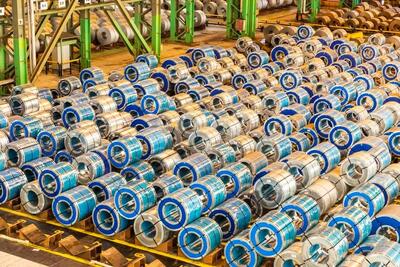
This movement is part of Mobarakeh Steel's story today—the narrative of an industry that views its responsibility as extending beyond steel production, directing a portion of its capabilities straight to human lives. The cancer screening initiative in Isfahan is not a routine project on a corporate social responsibility list. A choice was made here: the decision to direct CSR resources toward a broad societal benefit rather than stopping at constructing a building, equipping a facility, or supporting a specific group. Cancer does not discriminate based on industry, class, profession, or social status; therefore, fighting it cannot have a limited audience.
Since the launch of the breast and colorectal cancer screening initiative, more than 398,000 residents of Isfahan province have participated. This figure can easily be stated in reports and passed over, but when transformed back into human lives, it takes on a different meaning. 398,000 people means hundreds of thousands of opportunities to detect a disease before it is too late. In the breast cancer screening division, 268,849 individuals participated through the end of spring, leading to the identification of 117 cases. In spring alone, 108,115 individuals were screened, with 75% of the diagnosed cancer cases identified at stages zero, one, and two. These numbers do not merely speak of diagnosis; they speak of time—the critical window between "not yet too late" and "too late."
In colorectal cancer, this narrative becomes even clearer. During the spring season, 42,862 individuals participated in the screening program. 4,484 positive FIT tests were identified, leading to 965 colonoscopies. This process resulted in the identification of 304 polyps, of which 109 (equivalent to 36%) were diagnosed as high-risk.
Here, the story is not just about finding a disease; sometimes, it is about identifying something before it even becomes a disease. This is undoubtedly the most vital meaning of such …